Online education is often misunderstood, shaped by outdated assumptions about isolation, limited support, or lack of rigor. But today’s virtual classrooms look very different. At California Online Public Schools (CalOPS), learning is interactive, relationships are intentional, and students are supported every step of the way.
To separate fact from fiction, we sat down with CalOPS teachers to address some of the most common myths about online school, and share what the experience really looks like for students and families.
Myth #1: “Online school = no socialization.”
How do students connect and build friendships here?
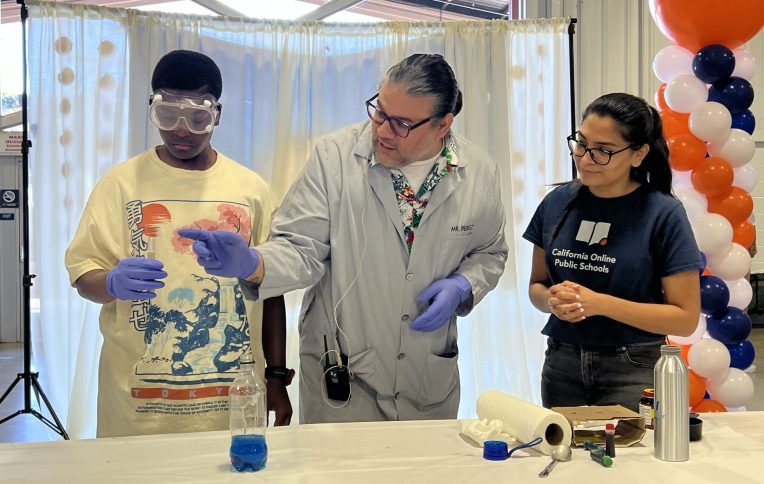
“There are so many ways that they can. Las year, I had a really good group that I hosted Friday social hangouts for my homeroom students. And these same students have a group chat together, they make plans, they get together and hang out, they go to Disneyland. They always send me pictures. We also have clubs, in-person festivals, and we have opportunities for interaction with each other during classes. I have several students who will come off mute in Zoom and talk. So there are a lot of opportunities for social activities here, we just have to help the students find them.” – Stephanie Parker, High School Education Specialist
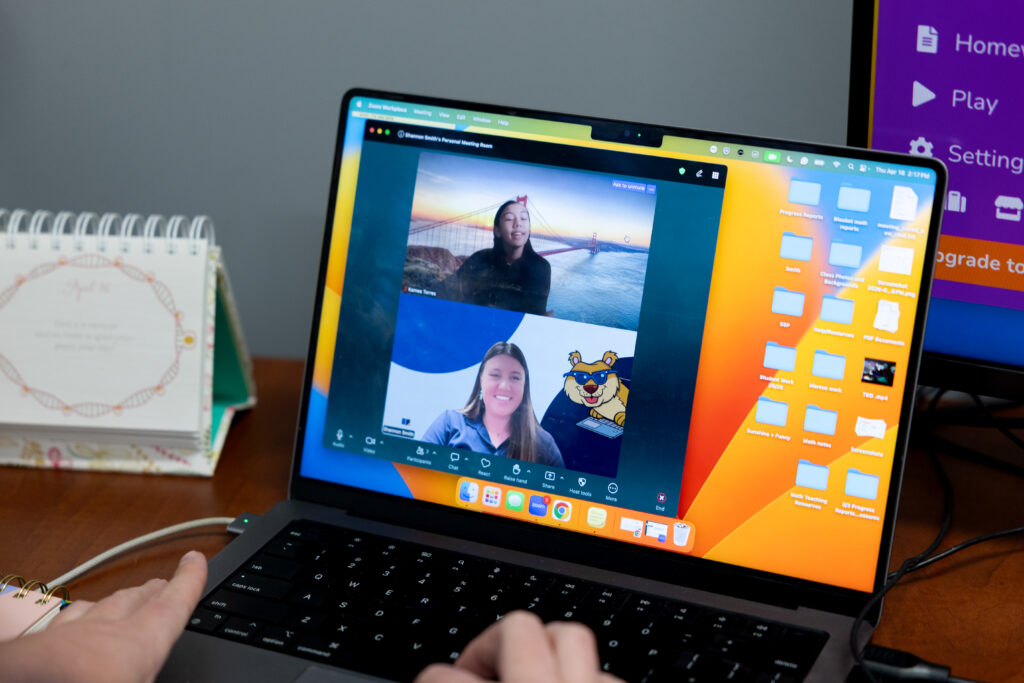
“Students in our classes build friendships in a lot of different ways. Every day, they’re in LiveClass for Language Arts and Math and they also work together and hang out in breakout rooms. They work collectively on projects and discussion boards. We have in-person festivals where we get to meet one another, as well as field trips. We’ve seen a lot of friends made in classes where the parents will even connect with one another so that the students are able to hang out outside of class and even play video games together.” – Shannon Smith
What would you say to someone who thinks students are isolated?
“I hear this a lot, especially from new parents and the first thing I like to tell them is that they have more accessibility to their teachers and their counselors than they do at an in-person school. Students are not isolated. I have students that will text me and be like, ‘Ms. Parker, can you help me with this?’ and I will always open Zoom, hop right in there, help them with what they need, and then they’re off and running again with more assignments. I feel like a lot of people believe that myth. A lot of people believe that online school is so isolating. I have more interaction with my students here and it’s meaningful interaction, not just, ‘hey, how are you?’ or a fist bump in the hallway or ‘welcome to class.’ More meaningful interactions with my students here than I ever had in a brick-and-mortar school.” — Stephanie Parker, High School Education Specialist
“I would say that connection just looks different in our setting, but they are connecting just as much as in person. There are a lot of students that join us who come from different backgrounds or maybe previous experiences in school where they necessarily wouldn’t be as social in the classroom as they are in our setting. So whether it’s homeroom calls or one-on-one check-ins or our daily LiveClasses, students actually feel a lot more comfortable sometimes at home and willing to participate and share in ways that they may not in in-person settings.” — Shannon Smith, Elementary Supervisor & 5th Grade Teacher
How does flexibility allow for more socialization outside of school?
“Students have a big opportunity to connect with other kids outside of school. For some students at our school, we have different athletes who work with their sports teams at all hours of the day. We have students who work in the morning and they may have their sports practices all afternoon or vice versa. I know a lot of gymnasts and ice skaters in particular, their practices are all throughout the morning and so traditional school schedules don’t work as well for them. They’re able to really lean into their spots and other hobbies because our schedule is a little more flexible, as well as it gives the opportunity for kids to join different after-school programs. I know right now, I have a student who does archery after school, who does Boys and Girls Club. All sorts of different ways to be involved socially with students in your area because your schooling can be a little more flexible and work around those activity times.” — Shannon Smith, Elementary Supervisor & 5th Grade Teacher
Myth #2: “Teachers aren’t accessible / can’t connect with students.”
How do you stay connected with your students throughout the day?
“I think setting those expectations early in the year really helps with that. Having consistent check-ins. So I have consistent calls with my students. I have consistent calls with their parents. Students know that if they’re stuck with something and they need help, they can reach out and they’re going to get the help they need. If I can’t provide that help to them, I will happily help them reach out to their course teachers and set up a meeting. I just feel like it’s so easy for them to get the help they need. We’re all available to help.” — Stephanie Parker, High School Education Specialist
“I would say that students stay connected with students pretty constantly throughout the day. We have a variety of ways that we contact one another and there are different touchpoints all throughout our school days. So one way that we always stay connected is through our daily LiveClasses. So we will connect with our entire class, students will connect with one another, and we’re all together for a couple of lessons each morning. I’m accessible by phone, by calling and texting, by email. Our Canvas platform has an email. We have one-on-one meetings. We’re very social throughout the day as far as interacting with your homeroom teacher and checking in with families. So, whether a student needs kind of an extra challenge in the curriculum or whether they’re falling behind in lessons, whatever your student needs to be individualized in their learning, we’re able to connect with them and just find exactly what you need.” — Shannon Smith, Elementary Supervisor & 5th Grade Teacher
How do you build meaningful relationships with students in a virtual environment?
“I’m able to build really good and strong relationships with my students because I listen to them. We don’t just talk about academics. When I get a new student, that first meeting, I don’t really talk about school. ‘Hey, how was your summer?’ ‘Tell me what you’re doing.’ ‘What are you interested in?’ ‘What do you like to do for fun?’ ‘Do you have pets?’ It can be anything that you can find to connect with them. If they mention something’s coming up, remember and ask them the next time you check in. They start to understand that, ‘oh, she might actually care about me.’ And it really helps to build those trustful relationships.” — Stephanie Parker, High School Education Specialist
“I think when it comes to building relationships with students in the virtual environment, you just have to be really intentional. You need to get to know your students, give them those opportunities to talk and to share. Whether it’s about their families or their hobbies, the things that they’re interested in, and then follow up on those things. When you know you have a student who has a sports game that weekend, follow up with them on Monday and ask them how it went. Or if a student is going to go on one of our in-person field trips, ask them about it the next day. Just remembering those little things about students and giving them an opportunity to share, it definitely builds a lot of meaningful connections and you get to know one another a lot better than some things you even do in other settings because you really have to be intentional about it.” — Shannon Smith, Elementary Supervisor & 5th Grade Teacher
How do students know they have support when they need it?
“Teachers are so accessible. Every teacher has office hours for their subject matter. Every teacher has a Zoom link where students can book one-to-one time with them. Every counselor has a Zoom link where students can book one-to-one time with them if they need it. We have work phone numbers. Students have those phone numbers. So many students will call or text me if they’re working on an assignment and if we can’t figure it out together on the phone, I will say, ‘Hey, just come into class.’ And then I’ll meet them on Zoom and we can work on it together there. The accessibility here is like nothing I’ve ever seen.” — Stephanie Parker, High School Education Specialist
“I think they know that they have support because from day one, we’re letting them know and providing that as a resource to them. Whenever we get a new student in our classes, we hold our welcome calls just to introduce them to the school and meet them face-to-face and start to get to know them and build that relationship. And then just every day in class, reminding them that you’re there to help support them, sending out reminders, sending out our newsletters. There’s just a consistent amount of communication where teachers are offering support and it’s a really big part of our school culture. As the teachers in our school, we really want to connect with our students and make sure that they are feeling supported.” — Shannon Smith, Elementary Supervisor & 5th Grade Teacher
Myth #3: “Parents have to teach.”
What’s the teacher’s role vs. the parent’s role in this model?
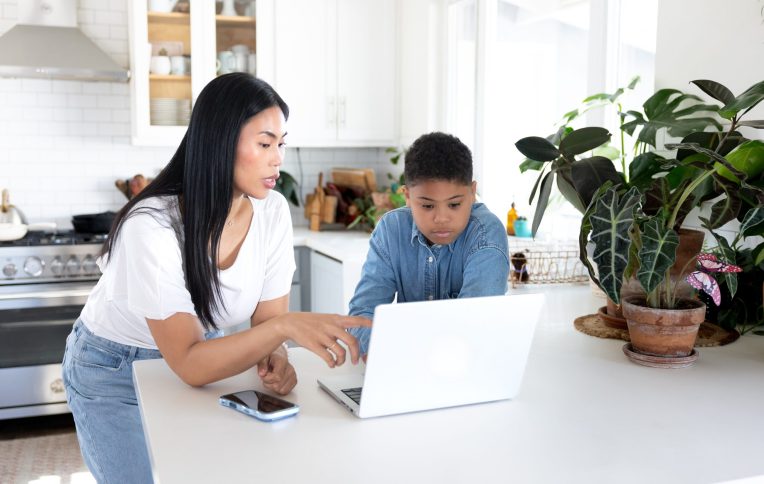
“That is a very common concern and I always want to reassure families that parents are not expected to be teachers. At CalOPS, students are taught by credentialed teachers, so we provide the instruction, we provide the support, we provide the feedback. We also step in when a student needs help understanding the material. The parent’s role is more about support. So they help with structure, they keep students on track, they reach out to teachers whenever something comes up. They’re not expected to know the material. They’re not expected to teach. So if a family is concerned, I usually say to them, ‘Don’t worry, you’re not expected to teach. That’s our job, but you do play a very important role and that is being part of the support system.’ And I feel that that is even more important than teaching sometimes.” — Hai Le, High School Math Teacher
“I started as a Learning Coach twenty-something years ago, which is super awesome. So I was able to experience both sides of teaching and being a parent. What’s really important to know is that the teachers are responsible for all of the lessons, instructions, and making sure that the students are on task and doing what they’re supposed to be doing. The parents are responsible for making sure that the students show up. That’s the most important thing. They just need to show up, take the phone calls, make sure that they’re going to their LiveClasses or viewing the classes after they’re recorded. So, as far as teaching goes, we’re fully credentialed. Most of us have been in education for several years, so they hire experienced teachers. We follow state standards. We’re all passionate about our subjects that we teach. I’m in theatre and performance and also photography and I’ve been in the industry for so many years. I’m really passionate about all of the subjects and I make sure that I find the light that glows inside the student and bring that out, and just make sure that the curriculum is enjoyable for them.” — Rose Emuge, High School Arts, Photography & Film/Theatre Production Teacher
How do you guide and support students academically?
“Our job is to make sure that students learn, so whenever a student needs help or needs support, they can reach out to me as a teacher and I set up one-on-one meetings with students and we go through problems together. By that time, I pretty much get to know my students pretty well, so I kind of know what works for them. I use a variety of resources, from sharing things to manipulatives to online digital resources, so that way parents just have to focus on getting the students to come to the meetings for support. But other than that, I take over as a teacher to make sure that they are learning the material.” — Hai Le, High School Math Teacher
“One way that I like to guide and support students academically is using data. I like to look at their grades and follow the trends of when they’re working and not working. So if a student is struggling, I’m definitely asking to see what their daily schedule is, if there’s anything that could be moved around to help them focus a little bit more on their education. I believe self-care is really important. It’s important to have a life outside of school and socialize and balance all of that. So I like to look at what’s happening inside the home and just help them schedule and manage everything so that they can focus when they need to on their school and work a little more on their lessons. One thing I like to do is create a planner. A planner is really important to help students focus and be accountable for what they are doing daily.” — Rose Emuge, High School Arts, Photography & Film/Theatre Production Teacher
What would you say to a parent worried they’ll have to do all the teaching?
“I would say to parents that no, they don’t have to teach their child because that’s my job as the teacher. And I love teaching. I love to share knowledge with students. So by them trying to teach, that’s taking away some of my joy as a teacher. So I prefer that they just leave it up to me. We will have a working relationship, me and the parents. That way parents can bring concerns to me, share things that they know are not clicking with students. And me as a teacher, I will use that to come up with a way that will help students.” — Hai Le, High School Math Teacher
“If a parent is worried that they will have to do all the teaching, they will be so happy the first day that they enroll and see the activities that we have planned for the students. The first thing that shows up is a to-do list and it has all of the assignments that the students can choose to work on that day. We are flexible, so students can pick and choose what they work on as long as they complete it by the end of the week. Everything is organized. We have pre-recorded videos for students who like to work ahead or have different schedules. Parents do not have to teach. We have LiveClasses that rotate throughout the week between different subjects so students can watch the live instructions or the videos to learn about the subjects that are being taught that week. If a parent wants to teach or do something extra to support their child, that’s welcomed.” — Rose Emuge, High School Arts, Photography & Film/Theatre Production Teacher
Myth #4: “Colleges don’t respect online schools.”
What have you seen when it comes to students getting into college?
“I know here at California Online Public Schools, that many of our students have, if you see the roster of students that have been accepted into schools like the UCs, Cal States, private universities, even elite universities, you’ll definitely see that is definitely not true. I have experienced having my students get accepted t o schools like UC Davis, UC Merced, and UC Irvine. So we prepare our students by providing them with the curriculum, the courses that they need to be able to be accepted into any college they choose. It’s really up to them and also us providing that support to them as well.” — Meena Duguay, High School English Teacher
How are students prepared for college in this environment?
“We really prepare our students for college in our online environment. And one of the ways we do that, I have to give credit to our counseling team, because they do a lot to help our students. One of the big things is they host LiveClasses and they bring in people from UCs, Cal States, some community colleges, to be able to just share about their schools. We also have this LiveClass, it’s on FASFA, so students are able to attend that and they’re able to actually work through the application. Counselors work very much one-on-one with our students by booking calls with them. They give advice on college. As a homeroom teacher to 12th graders, I personally do that because I used to work at a college. I always feel like it’s my job to be able to support them and find things about the colleges of their choice. I go online, I look at the website, we check those together, I find different programs or scholarship opportunities. So there’s a very individualized approach to supporting students getting into college.” — Meena Duguay, High School English Teacher
Can you speak to the rigor or credibility of the curriculum?
“I can definitely speak to the rigor and credibility of our curriculum. A couple years ago, we had a whole meeting where the teachers were a big part of it, and we went through different curriculums. We broke it down, we were looking at 3 or 5 curriculums possible for our students. And then on top of that, our school reviews the curriculum every year to make sure that it’s still up to standards. Our teachers are very, very involved. We don’t just use the curriculum. We go through it with a fine-toothed comb. If we can’t find something that’s in the curriculum that we’re provided with, we add in more things like lessons and assignments. We want to make that curriculum engaging. We want the students to have it be at mastery level while meeting state standards.” — Meena Duguay, High School English Teacher
Myth #5: “Online school is easier / less rigorous.”
How does the academic rigor at CalOPS compare to traditional schools?
“This is definitely a myth that a lot of people have. They think coming into an online school is easier than a traditional school. I think it’s proven to not be the case. Students have to be independent at an online school, whereas in a traditional school, there is a level of independence but there’s always a teacher there helping students through an assignment. In an online school, students are working independently. They have support, but ultimately, they’re responsible for getting their work done. So I think online school is more rigorous.” — Ryan Counts, Middle School Social Studies & AVID Teacher
What would you say to a parent who thinks students don’t have to work as hard here?
‘I’ve heard that one a lot and it’s definitely not true. Students do have to work, I think, harder in an online school than a traditional school. They have to be independent, they have to work every day, they have to get their lessons done. Whereas in a traditional school, they have a teacher in the classroom helping them through that. In an online school, they have support, however, they’re the ones responsible for getting their lessons done, signing in each day. They don’t have a teacher there saying, ‘Hey, you need to do your work.’ They have to be motivated to do it. And also, if they need help in the classroom, the teacher can tell this student needs help. In our environment and online school, students need to take initiative and ask for help before there’s data indicating they need help. I think that makes online school more rigorous.” — Ryan Counts, Middle School Social Studies & AVID Teacher
How do students prepare for standardized tests or college-level work in this environment?
“I think online school prepares students really well for college. At a college, your professors are not going to track you down to offer help or say, ‘Hey, you’re missing this.’ They’re going to expect that you’re doing it. Students that have gone to an online school for K through 12, they already know how to do that. They have to get their work done each day. If they need help, they reach out for help. They’re already independent and ready for that next challenge. And then in terms of standardized testing, there is kind of a myth that online schools aren’t going to prepare students as well for standardized testing. That’s not true. We have to plan our curriculum around state standards just like any other school. And I think students going through those lessons independently are gaining more knowledge than a student in a traditional school where they may not be going through it independently. So I think our kids can be more ready for standardized testing.” — Ryan Counts, Middle School Social Studies & AVID Teacher
At the end of the day, online education isn’t about replacing what works in traditional schools—it’s about rethinking how learning, connection, and support can happen in ways that better fit students’ lives. As our teachers shared, CalOPS students are building real friendships, receiving consistent and meaningful support, and engaging in rigorous academics that prepare them for college and beyond. The difference isn’t a lack of structure or connection—it’s a more intentional, flexible approach that meets students where they are. When you look beyond the myths, what emerges is a learning environment designed to empower students to take ownership of their education, stay connected, and thrive on their own terms.